Profiterole pastry

345 min
hard
6 ingredients

Profiterole pastry

History and Origin of Profiterole Pastry

Profiterole pastry, also known as choux pastry, has its roots in 16th-century French cuisine. Originally created by the chef of Queen Catherine de' Medici, this light and versatile dough has become the base for numerous desserts and savory preparations. In Latin America, although it is often known as profiterole pastry, in some countries like Mexico or Argentina it is also simply called choux pastry or eclair dough.

In other Latin American countries, the variety and use of this pastry may vary, but the base is always the same. For example, in Argentina it is common to prepare profiteroles filled with dulce de leche or pastry cream, while in Mexico they are used in both desserts and savory appetizers. The technique for preparing it has been passed down through generations, finding a place in many home and professional kitchens.

How to Make Profiterole Pastry

Ingredients: All-purpose wheat flour, water, unsalted sweet butter, salt, eggs, egg.

Place water, butter, and salt in a large, heavy saucepan and bring to a boil.

Remove from heat and add the flour all at once.

Mix as quickly as possible with a sturdy wooden spoon.

This mixture is known as a "panade."

Return the saucepan to the stove over the lowest possible heat.

Continue stirring with the wooden spoon while the panade dries out.

This will take about 5 minutes, and a thin layer will form on the bottom of the saucepan.

This is supposed to happen, so don't worry and do not try to scrape it off and incorporate it into the dough, or you will have hard pieces in your pastries.

The dough should be smooth, but when pinched between your thumb and index finger it should not stick to your hand.

Pour the panade into a bowl and let it cool for at least 5 minutes.

Then add the eggs, one at a time, beating well after each addition.

The mixture should look smooth and creamy before adding the next egg.

After beating all 4 eggs, the dough will be shiny and satin yellow, thick and heavy.

Grease and flour a cookie sheet.

Fill a pastry bag with the dough.

If you don't have a pastry bag, you can use a spoon to drop portions of dough onto the sheet for eclairs and/or profiteroles, but you really should have a pastry bag to make a profiterole crown.

For profiteroles, pipe balls the size of ping pong or golf balls.

For eclairs, pipe oblong shapes 7 to 10 cm long.

If you use the recipe given above, you should end up with 14 to 16 pastries.

Do not succumb to the temptation of making fewer and larger ones, as they will not cook properly.

Brush the top of the pastries with beaten egg, using the bristles of the brush to gently press down and flatten the small curls left by the pastry bag when lifting it.

Finally, run the tines of a table fork along the length of each eclair.

The resulting ridges will make the product more attractive and professional.

For a profiterole crown, first mark a 25 cm circle on the surface of the greased and floured tray.

Then, using a pastry bag, pipe a 2.5 cm wide "halo" of profiterole pastry right on the circle you have outlined.

Pipe another ring of dough 2.5 cm wide adjacent to and touching the first one.

Pipe a third ring right over the "crack" between the other two.

Brush everything with beaten egg and sprinkle a handful of thinly sliced almonds over the crown.

Let the profiteroles, eclairs, or profiterole crown rest and "dry" for no less than 15 and no more than 25 minutes before baking.

The oven should be preheated to 190°C for profiteroles and/or eclairs, and to 200°C for the profiterole crown.

Bake the first ones at 190°C for about 30 minutes, or until they have puffed up well and are golden brown.

Bake the crown at 200°C for about 45 minutes, or until it is well puffed and golden.

Then, turn off the oven, open the door, and leave it slightly ajar for one hour.

If it doesn't stay ajar on its own, prop it open with something.

This allows the steam to escape and the pastries to cool slowly and "dry" as they cool so they don't collapse or become soft and moist.

After an hour, remove the pastries from the oven.

They are now ready to be filled.

To fill individual pastries: cut the profiteroles and eclairs in half.

Fill with the filling of your choice.

Place the tops back on.

Glaze with icing or pour sauce over the top.

Serve.

It is wise not to fill the pastries too far in advance of serving.

The closer the preparation time is to the serving time, the less likely the pastries are to soften or become moist.

To fill a cream crown: use a long serrated knife to cut the top off the profiterole crown.

Fill the base with praline cream.

Fill a pastry bag with sweetened whipped cream.

Use a zigzag-edged tip to pipe a layer of decorative whipped cream balls over the layer of praline cream.

Finally, place the top back on and dust the top with confectioners' 10x sugar.

Keep the profiterole crown in a cool, dry place until serving time.
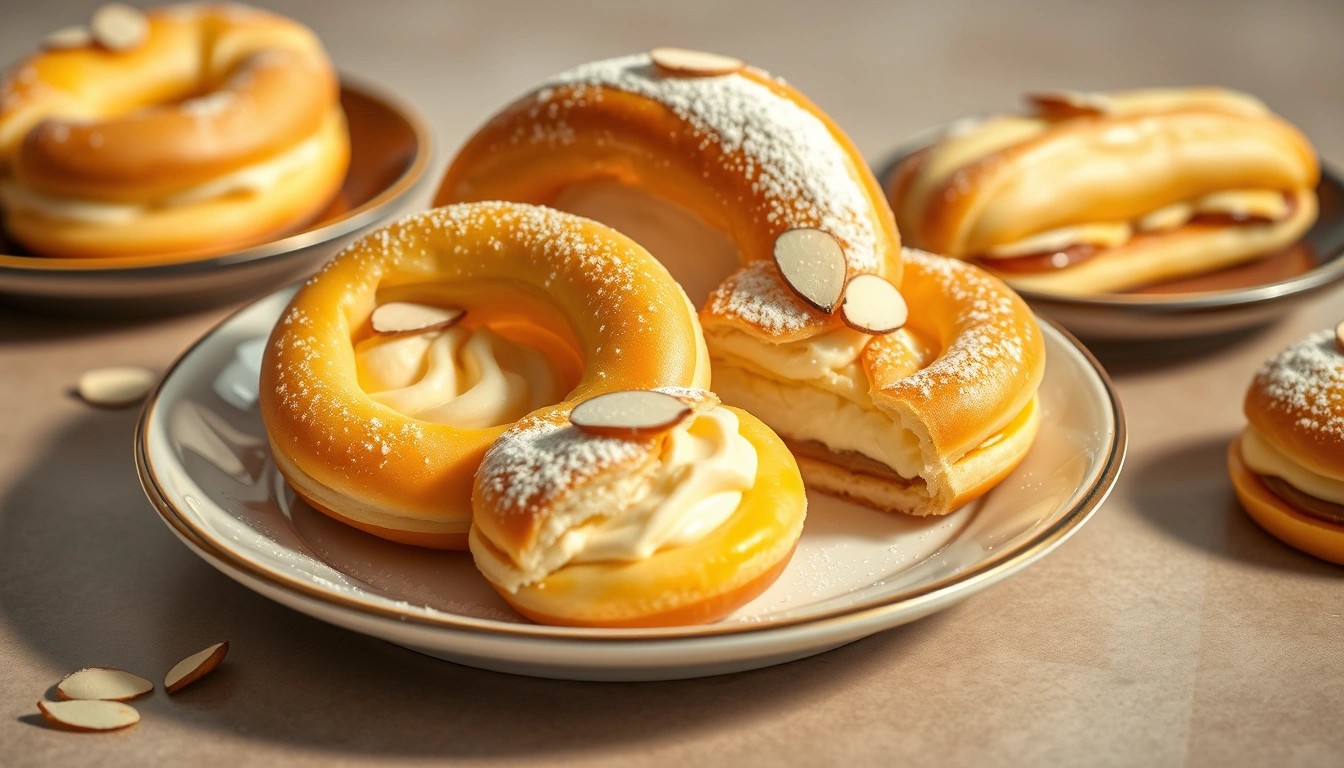
Profiterole pastry

Ingredients (6)

  • All-Purpose Wheat Flour
  • Water
  • Unsalted Sweet Butter
  • Salt
  • Eggs
  • Egg

Instructions (74 steps)

  1. 1 Put water, butter, or salt in a large, heavy saucepan and bring to a boil
  2. 2 Remove from heat and add the flour all at once
  3. 3 Mix as quickly as possible with a sturdy wooden spoon
  4. 4 This mixture is known as a "panade
  5. 5 Return the saucepan to the stove over the lowest possible heat
  6. 6 Continue stirring with the wooden spoon while the panade dries out
  7. 7 This will take about 5 minutes, and a thin layer will form on the bottom of the saucepan
  8. 8 This is supposed to happen, so dont worry and don't try to scrape it and incorporate it into the dough
  9. 9 or you will have hard pieces in your pastries
  10. 10 The dough should be smooth, but when you pinch it between your thumb and forefinger it should not stick to your hand
  11. 11 Pour the panade into a bowl and let it cool for at least 5 minutes
  12. 12 Then add the eggs, one at a time, beating well after each addition
  13. 13 The mixture should look smooth and creamy before adding the next egg
  14. 14 After beating all 4 eggs, the dough will be shiny and satin-yellow, thick and heavy
  15. 15 Grease and flour a baking sheet
  16. 16 Fill a pastry bag with the dough
  17. 17 If you dont have a pastry bag
  18. 18 you can use a spoon to drop portions of dough onto the sheet for eclairs and/or profiteroles
  19. 19 but you really should have a pastry bag to make a profiterole crown
  20. 20 For the profiteroles, pipe balls the size of ping pong or golf balls
  21. 21 For the eclairs, pipe oblong shapes 7 to 10 cm long
  22. 22 If you use the recipe given above, you should end up with 14 to 16 pastries
  23. 23 Do not succumb to the temptation to make fewer and larger ones, as they will not cook properly
  24. 24 Brush the top of the pastries with beaten egg, using the bristles of the brush to gently press down and flatten the small curls left by the pastry bag when lifting it
  25. 25 Finally, run the tines of a table fork along the length of each eclair
  26. 26 The resulting stripes will make the product more attractive and professional
  27. 27 For a profiterole crown, first mark a 25 cm circle on the surface of the greased and floured baking sheet
  28. 28 Then, using a pastry bag, pipe a 2.5 cm wide "halo" of profiterole paste right on the circle you have outlined
  29. 29 Pipe another ring of dough 2.5 cm wide adjacent to and touching the first one
  30. 30 Pipe a third ring right over the "crack" between the other two
  31. 31 Brush everything with beaten egg and sprinkle a handful of thinly sliced almonds over the crown
  32. 32 Let the profiteroles, eclairs, or profiterole crown rest and "dry" for no less than 15 and no more than 25 minutes before baking
  33. 33 The oven must be preheated to 190°C for profiteroles and/or eclairs, and to 200°C for the profiterole crown
  34. 34 Bake the first ones at 190°C for about 30 minutes, or until they have puffed up well and are golden brown
  35. 35 Bake the crown at 200°C for about 45 minutes, or until it is well puffed and golden
  36. 36 Then, turn off the oven, open the door, and leave it slightly ajar for one hour
  37. 37 If it doesnt stay ajar on its own
  38. 38 prop it open with something
  39. 39 This allows the steam to escape and the pastries to cool slowly and "dry" as they cool so they dont collapse or become soft and moist
  40. 40 After an hour, remove the pastries from the oven
  41. 41 They are now ready to be filled
  42. 42 To fill individual pastries: cut the profiteroles and eclairs in half
  43. 43 Fill with the filling of your choice
  44. 44 Place the tops back on
  45. 45 Glaze with icing or pour sauce over the top
  46. 46 Serve
  47. 47 It is prudent not to fill the pastries too far in advance of serving time
  48. 48 The closer the preparation time is to the serving time, the less likely the pastries are to soften or become moist
  49. 49 To fill a cream crown: use a long serrated knife to cut the top off the profiterole crown
  50. 50 Fill the base with praline cream
  51. 51 Fill a pastry bag with sweetened whipped cream
  52. 52 Use a zigzag-edged tip to pipe a layer of decorative whipped cream balls over the layer of praline cream
  53. 53 Finally, place the top back on and dust the top with 10x confectioners\' sugar
  54. 54 Keep the profiterole crown in a cool, dry place until serving time
  55. 55 - - - - - - - - - - - - - - - - - - exported from mastercook praline filling recipe by: homemade good news serving size: 1 preparation time: 0:00 categories: cakes amount measure ingredient -- preparation method -------- ------------ -------------------------------- 1 cup of 10x confectioners\' sugar 1/2 cup of almonds to make the vanilla pastry cream
  56. 56 Place the sugar and nuts in a heavy saucepan and put over medium heat
  57. 57 Stir constantly with a wooden spoon
  58. 58 It will take a while for the sugar to melt because there is no water or other liquid in the pot
  59. 59 Keep stirring! As soon as the sugar melts, it will turn into caramel
  60. 60 Immediately remove from heat and pour the caramel onto a greased marble slab or onto a greased baking sheet
  61. 61 Let cool
  62. 62 When the caramel is cold, it will be hard and brittle
  63. 63 Break into pieces, place the pieces in the blender or food processor, and grind them into a powder
  64. 64 Incorporate the praline powder into the vanilla pastry cream
  65. 65 - - - - - - - - - - - - - - - - - -
  66. 66 Bring to a boil
  67. 67 Cool to lukewarm temperature
  68. 68 Add water to taste
  69. 69 Serve over eclairs or profiteroles
  70. 70 - - - - - - - - - - - - - - - - - -
  71. 71 If you pour the glaze while it is hot, it will run over the surface of the eclairs or profiteroles instead of sticking
  72. 72 It should be lukewarm when you pour it
  73. 73 For a sweeter glaze, increase the amount of semisweet chocolate and decrease the amount of bittersweet chocolate
  74. 74 Kim C

Nutritional Information

Calories: 1626 kcal
Protein: 90%
Carbohydrates: 32%
Fat: 180%
Sugar: 5%
Sodium: 39%

Percent Daily Value for nutrients; calories are shown in kcal.

Category