Origin and Name in Latin America
Self-rising flour is a fundamental ingredient in baking and pastry. Its origin dates back to the need to simplify the preparation of fluffy doughs without having to add leavening agents separately. In many Latin American countries, this product is known as "harina preparada" or "harina con polvo leudante". Although it is commercially available in some places, it is also common to prepare a homemade substitute that provides similar results.
In different countries of the region, the name may vary: in Mexico it is often called "harina de todo uso con polvo para hornear", in Argentina it is simply known as "harina leudante", and in Colombia some people call it "harina con polvo de hornear". Regardless of the name, its main function is to incorporate an agent that makes the dough rise and have a soft and airy texture.
How to Prepare a Homemade Substitute for Self-Rising Flour
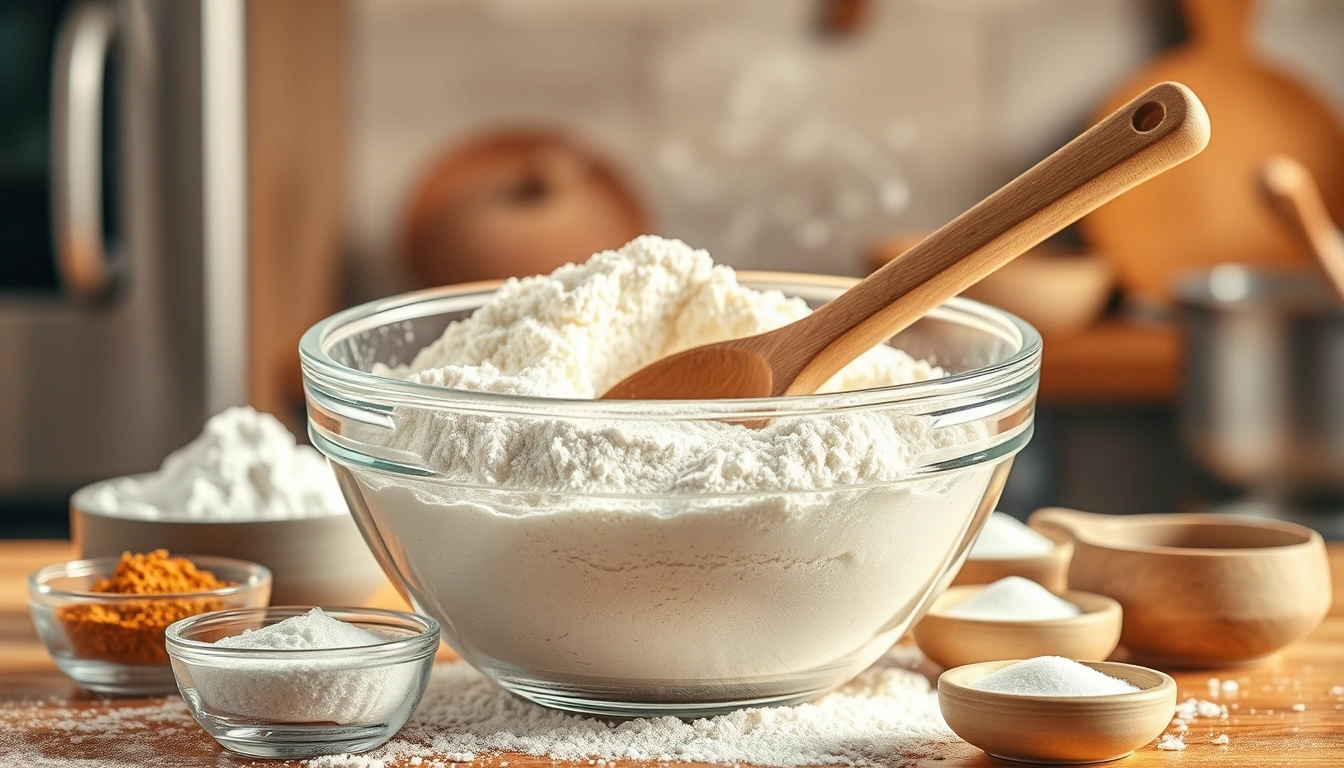
Ingredients: Flour, Baking soda, Cream of tartar, Salt.
Steps:
Mix Flour with Baking soda, Cream of tartar, and a pinch of Salt.