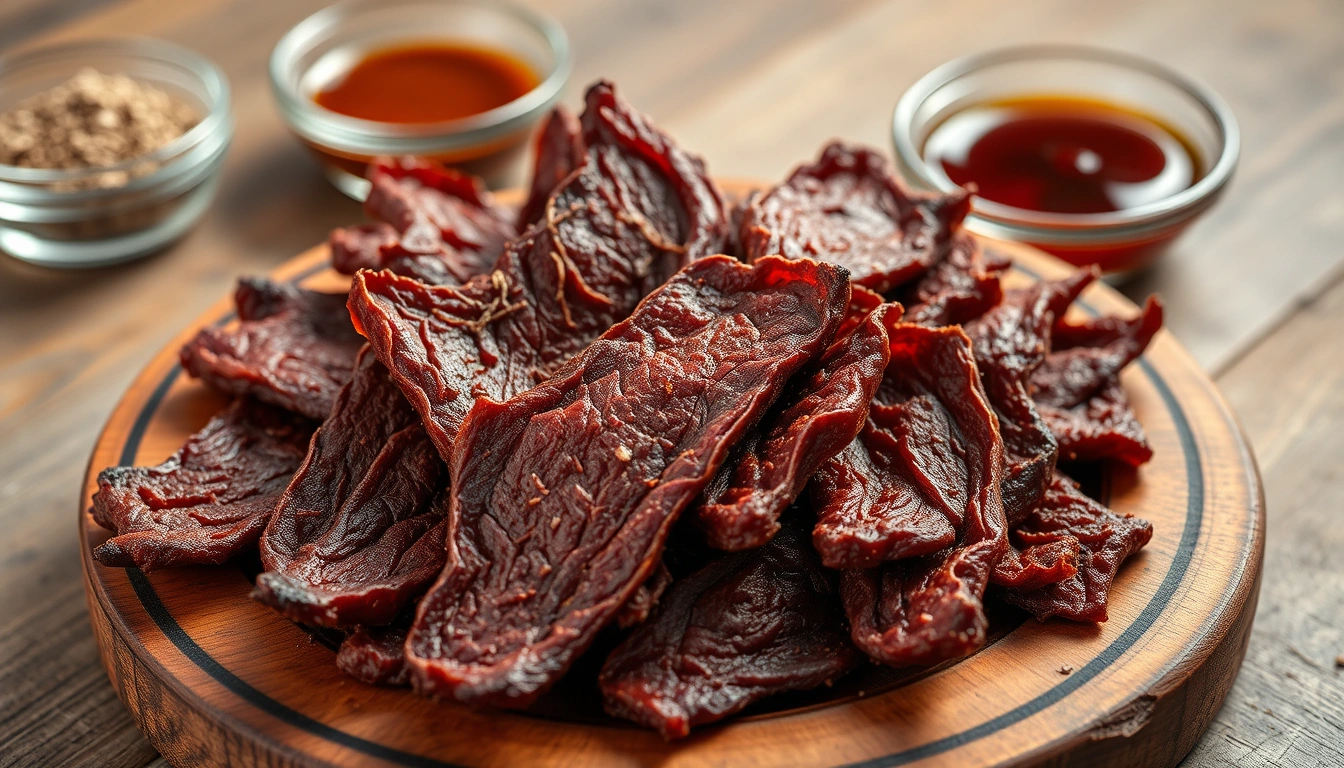
Beef jerky is a traditional preparation that has accompanied various Latin American cultures since ancient times. Its origin dates back to indigenous and peasant practices that sought to preserve meat for long periods without the need for refrigeration, using sun-drying or wind-drying techniques. In countries like Mexico, it is commonly known as "carne seca" or "cecina," while in other places like Colombia and Venezuela, it goes by similar names, albeit with small variations in preparation and spices. In Argentina and Uruguay, a grilled version is called "charqui," a word derived from Quechua, which also means dehydrated meat.
This preservation method not only allowed for survival in times of scarcity but also gave rise to a food with an intense flavor and unique texture, ideal for consuming as a protein snack or as a complement in different dishes. Today, beef jerky is still appreciated throughout Latin America, being reinvented in homemade and commercial recipes, and adapting to modern processes like oven dehydration, which ensures better control and food safety.