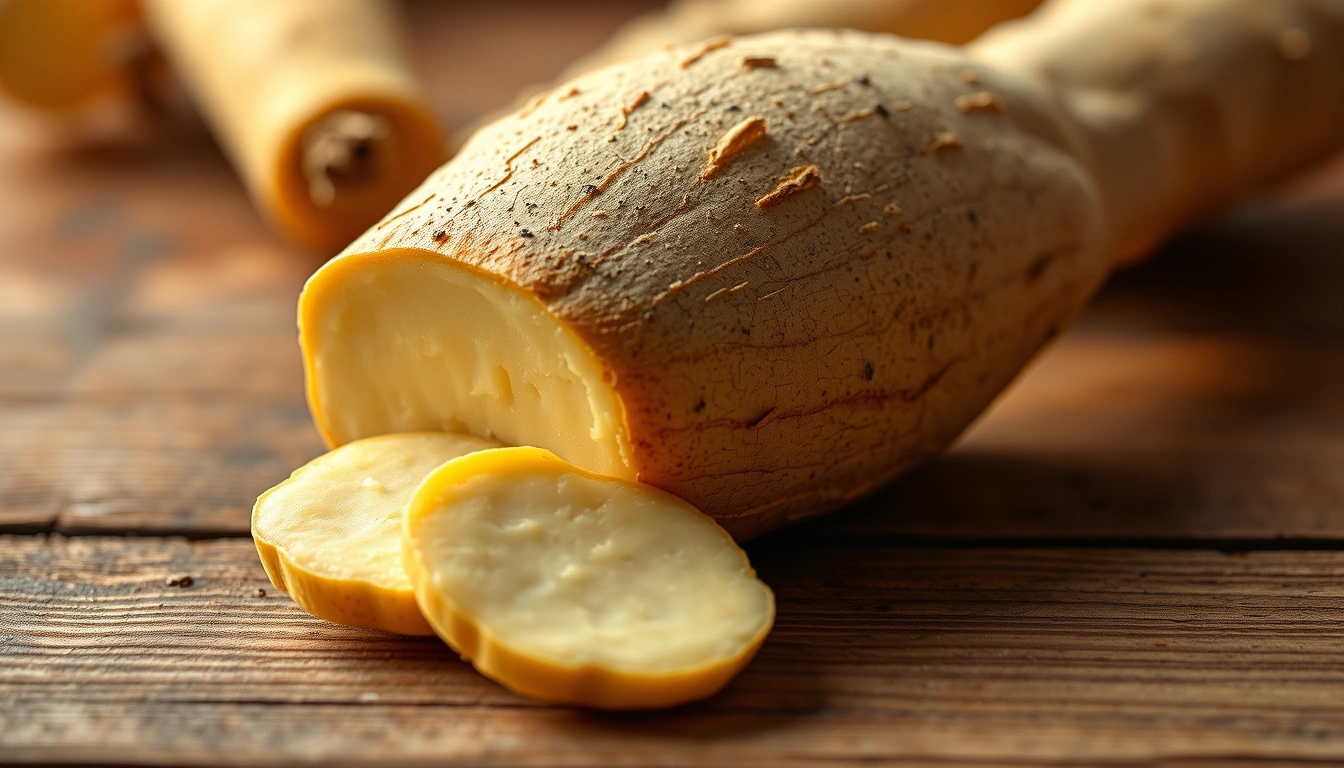
Used in multiple popular recipes
Ingredient Information
Name
Yellow taro root
Category
Vegetables
Popularity
14 recipes
Status
Inactive
Description
Yellow taro root is an edible tuber characterized by its rough skin and pale yellow flesh. It is a highly valued food in various cuisines around the world, especially in the tropical and subtropical regions where it is traditionally cultivated.
Origin: Taro is native to Southeast Asia and Oceania and has been a staple food in these regions for thousands of years. Its cultivation spread to other parts of the world, such as Africa, Latin America, and the Caribbean, where it also plays an important role in local gastronomy.
Properties: Yellow taro root is rich in complex carbohydrates, especially starch, making it an efficient source of energy. It also provides dietary fiber, B vitamins (such as B6), vitamin C, and minerals like potassium, magnesium, and iron. Its fat and protein content is low, and it is naturally gluten-free, making it ideal for special diets. Due to its creamy texture when cooked, it is commonly used in purées, stews, soups, and fried dishes.
Synonyms in Latin American Spanish: In different countries, it is also known as malanga amarilla, ocal, quigua, or simply taro. It is important to note that although in some places "malanga" may refer to similar tubers from other species, yellow taro root is often included under this name.
In cooking, yellow taro root provides a mild, slightly sweet flavor and a starchy texture, making it ideal for both sweet and savory dishes. It is a versatile ingredient in the preparation of both traditional and modern recipes.