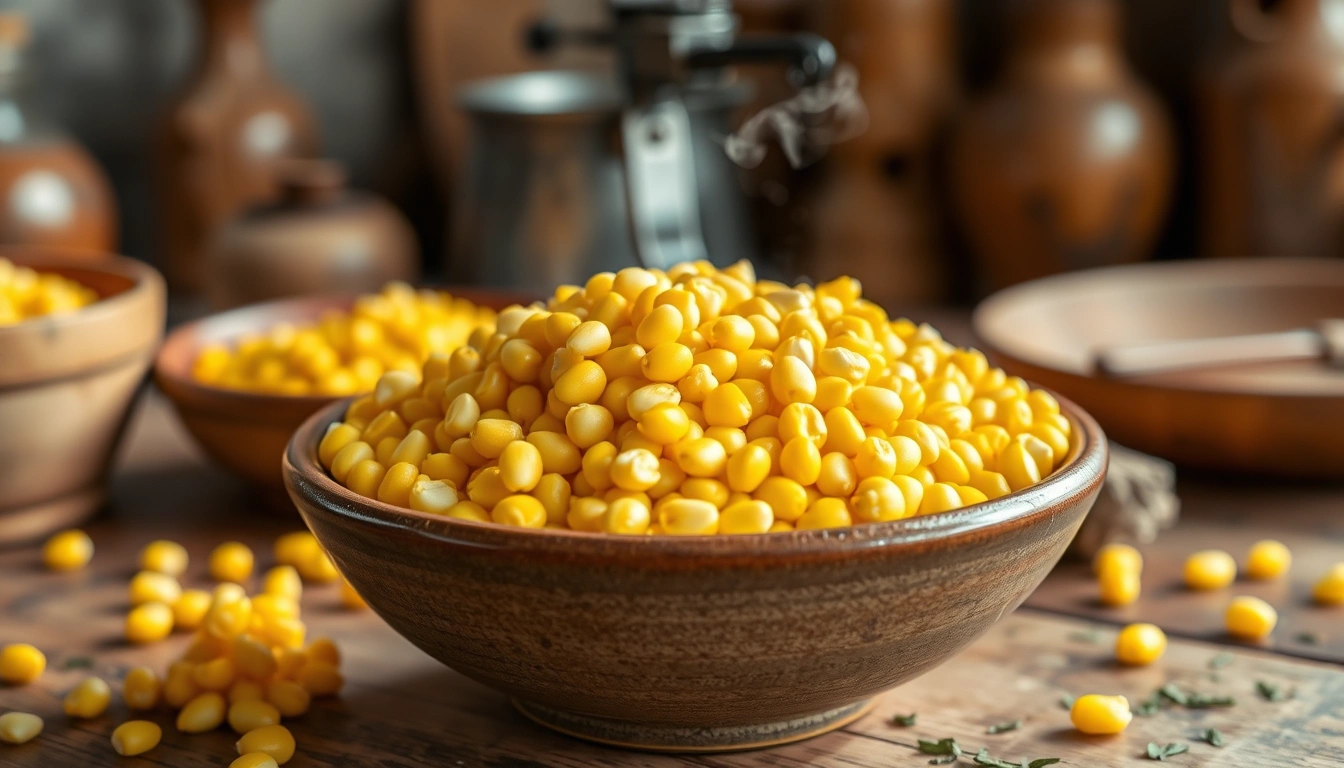
Used in multiple popular recipes
Ingredient Information
Name
Yellow hulled corn
Category
Cereals and Grains
Popularity
27 recipes
Status
Inactive
Description
Yellow hominy corn is a type of large, cooked corn, characterized by its intense yellow color and its soft yet firm texture after the cooking process. It is obtained from dried yellow corn that has undergone a traditional soaking and cooking process, known as "mote," which removes the external skin of the kernel and softens it for consumption.
This ingredient originates from various regions of Latin America, especially in Andean countries such as Peru, Ecuador, and Bolivia, where hominy corn is a traditional food in the local diet, used in soups, stews, and side dishes.
Regarding its nutritional properties, yellow hominy corn is an excellent source of complex carbohydrates, fiber, and plant-based proteins. It also provides B vitamins and minerals such as magnesium and phosphorus. Its consumption contributes to sustained energy and good digestion, making it a very valuable ingredient in nutritious and comforting recipes.
This food is also known in various Latin American countries by different names; some of the most common synonyms in Spanish include "maíz pelado" (peeled corn), "maíz sancochado" (parboiled corn), "maíz cocido" (cooked corn), or simply "mote" (hominy). In specific regions, it might also be found as "choclo pelado" (peeled corn cob) or "maíz partido" (cracked corn), always referring to the same type of corn prepared for use in cooking.