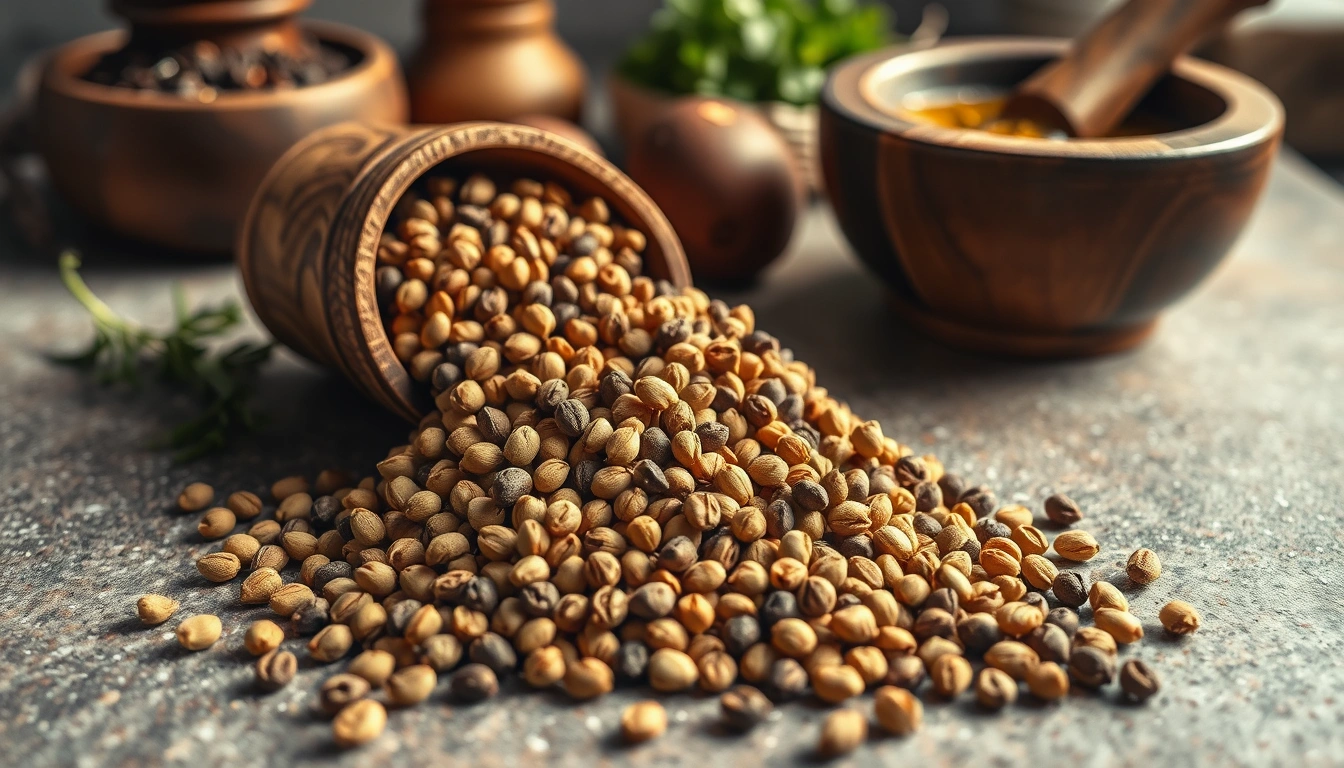
Used in multiple popular recipes
Ingredient Information
Name
Whole mustard seeds
Category
Spices and Herbs
Popularity
10 recipes
Status
Inactive
Description
Whole mustard seeds are the small, round seeds that come from the mustard plant, commonly from the Brassica nigra (black mustard), Brassica juncea (brown mustard), and Sinapis alba (white or yellow mustard) varieties. These seeds are highly valued in cooking for their spicy, slightly bitter, and aromatic flavor, which adds a special touch to sauces, pickles, marinades, and curries.
Origin: Mustard is native to the Mediterranean region and Western Asia, where it has been cultivated since ancient times for both its seeds and leaves. Today, mustard seeds are widely used in various cuisines around the world, especially in India, Europe, and Latin America.
Properties: In addition to their culinary value, mustard seeds have digestive, carminative, and anti-inflammatory properties. They are rich in antioxidants, minerals such as calcium, iron, and magnesium, and contain sulfur compounds that give them their characteristic flavor and health benefits. In cooking, whole seeds are often toasted or lightly fried to release their aroma and flavor, and they are a key ingredient in many traditional preparations.
Synonyms in Spanish from Latin America: in different regions, they may also be called mostaza en grano, semillas de mostaza, or simply granos de mostaza. In some countries, they may be referred to as mostaza negra or mostaza amarilla, depending on the variety.