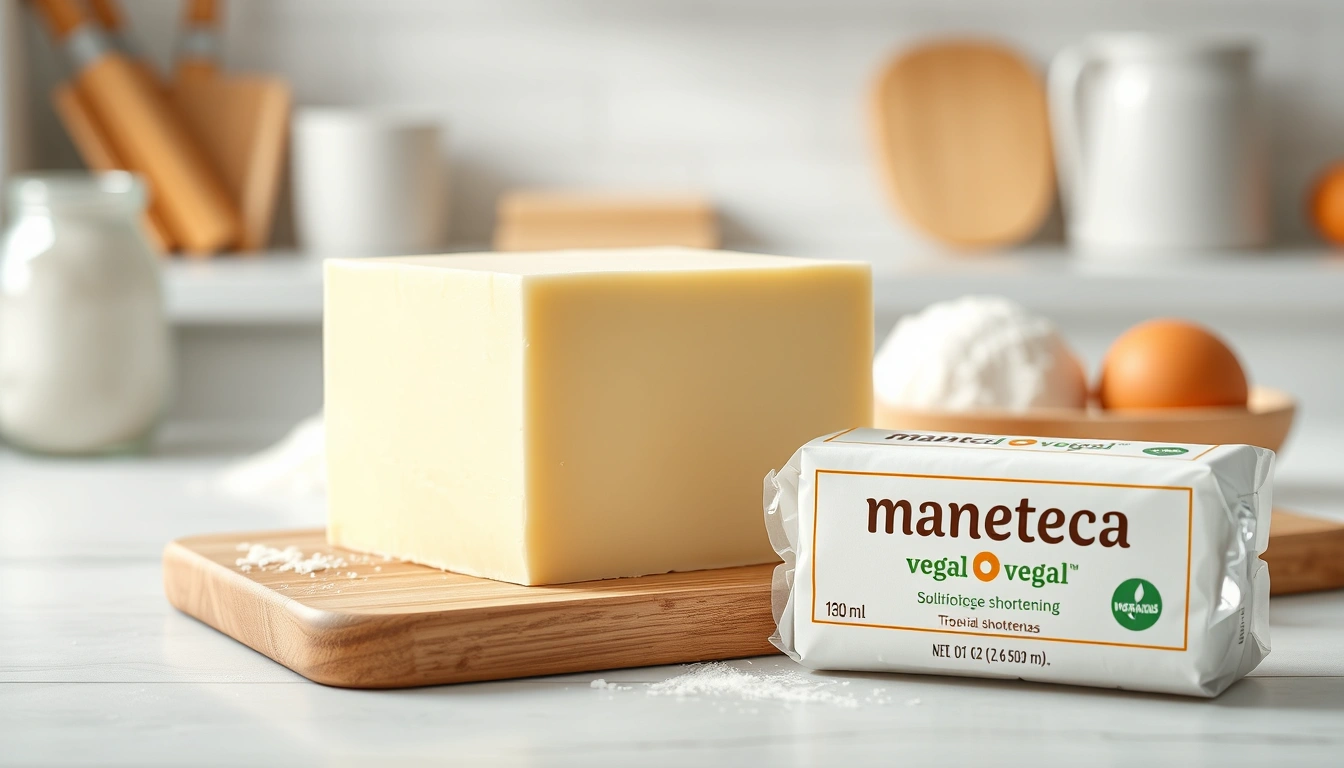
Used in multiple popular recipes
Ingredient Information
Name
Vegetable shortening
Category
Oils and Fats
Popularity
386 recipes
Status
Inactive
Description
Vegetable shortening is a solid fat obtained from vegetable oils that have been hydrogenated or partially hydrogenated to give them a firm texture similar to that of animal-based lard. It is widely used in cooking and baking for its ability to provide a flaky and spongy texture to baked goods such as cakes, cookies, and general bakery items.
The origin of vegetable shortening lies in the industrial processing of oils such as palm, soybean, sunflower, or coconut. Through the hydrogenation process, these liquid oils are converted into solid fats at room temperature, which facilitates their use in different culinary preparations.
Regarding its properties, vegetable shortening is neutral in flavor and odor, which allows it not to alter the taste of recipes. It has a relatively high melting point, ideal for obtaining crispy and consistent doughs. Furthermore, being a cholesterol-free fat of vegetable origin, it is preferred by those who avoid animal fats for dietary or ethical reasons.
In Hispanic America, vegetable shortening is also known by different names depending on the country, such as vegetable fat, soy shortening (when it comes from soybean oil), or simply shortening, distinguishing it from animal-based lard, such as pork lard. It is important not to confuse it with margarine; although both are derived from vegetable oils, vegetable shortening is more solid and pure, without additives or emulsifiers.