Used in multiple popular recipes
Ingredient Information
Name
Sago
Category
Cereals and Grains
Popularity
9 recipes
Status
Inactive
Description
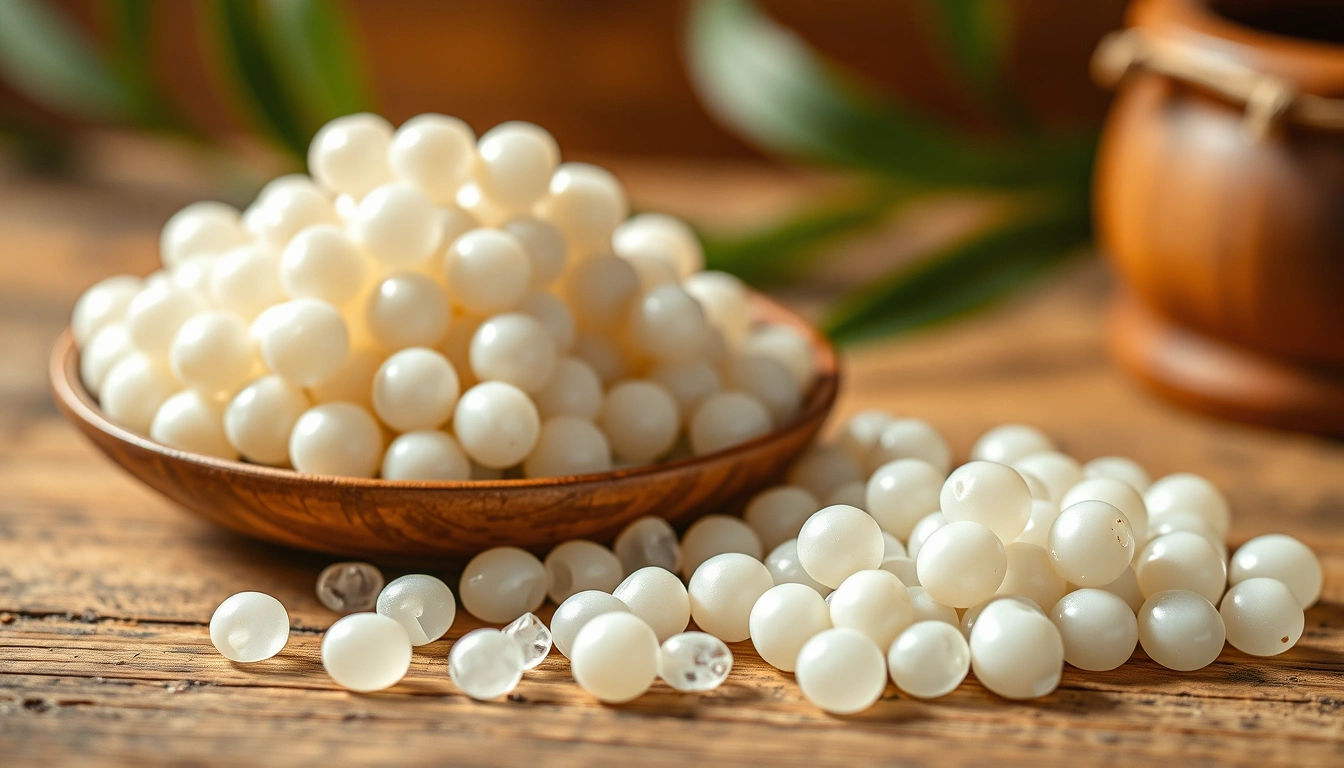
Sago is a starch extracted primarily from the core of various palm trees, especially the sago palm, and is commonly used in cooking to thicken and add texture to various dishes. It is generally found in the form of small white or gray pearls that, when cooked, acquire a gelatinous and translucent texture highly valued in desserts, soups, and beverages.
Sago has its origin in tropical regions of Asia and Oceania, such as Indonesia, Malaysia, and New Guinea, where it has historically been an important source of carbohydrates for local populations. Its production also extends to some areas of Latin America.
Regarding its properties, sago is primarily a carbohydrate, low in fats and proteins, thus providing quick energy. It is gluten-free, making it a popular alternative for people with gluten intolerance or allergy. Furthermore, its neutral flavor allows it to be easily combined with other ingredients without altering the final taste of the dish.
Depending on the country, sago may be known by various synonyms in Spanish, especially in Hispanic America, such as: almidón de sagú, perlas de sagú, or simply sagu. In some places, it is confused or associated with tapioca, although they are starches derived from different plants.