Popularity
14 recipes
Used in multiple popular recipes
Ingredient Information
Name
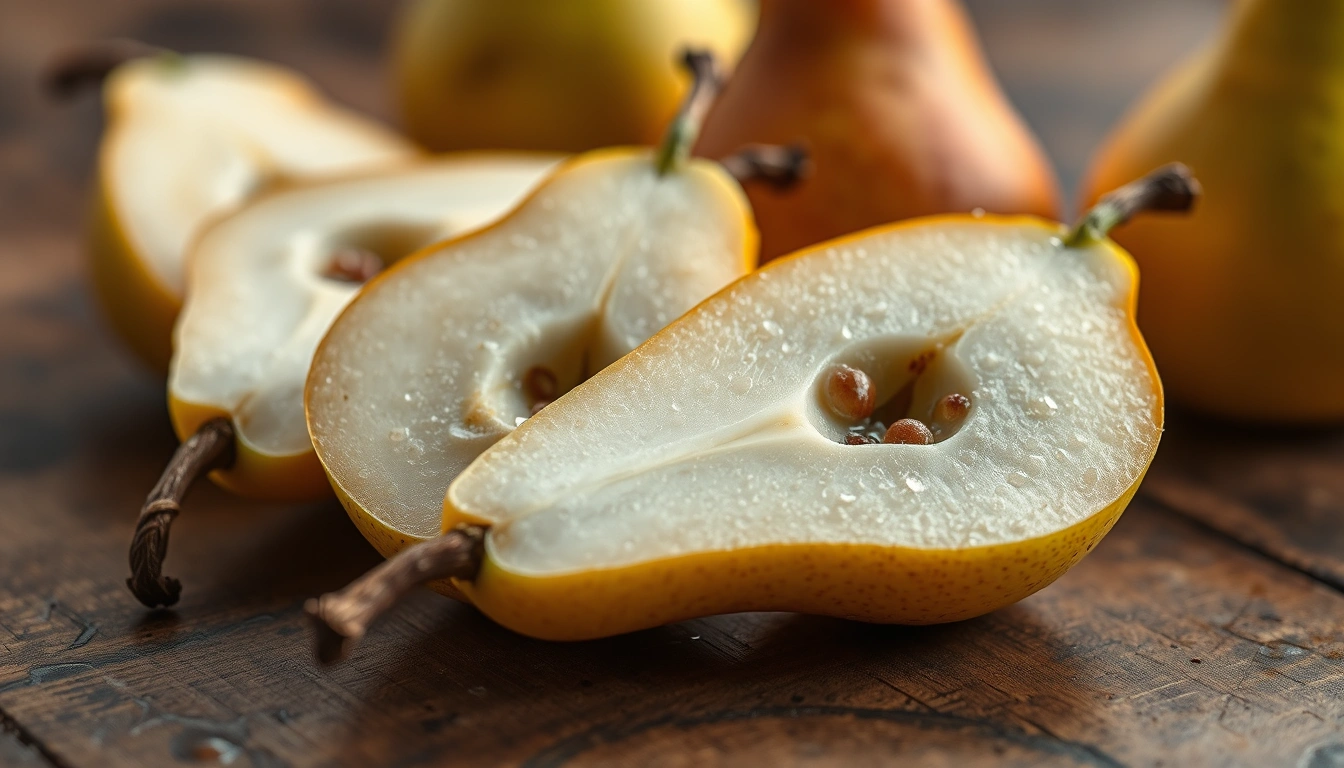
Pear halves
Category
Fruits
Popularity
14 recipes
Status
Inactive
Description
Pear halves are fresh fruits that have been cut in half lengthwise, preserving their skin, pulp, and central seeds. The pear is a juicy and sweet fruit, with a soft and slightly grainy texture that softens as it ripens, making it an ideal ingredient for various culinary preparations, from desserts to salads and savory dishes.
Origin: The pear is native to temperate regions of the northern hemisphere, especially Europe, Asia, and northwestern Africa. It has been cultivated for thousands of years, and there are numerous varieties adapted to diverse climates, which has favored its wide distribution in global cuisine.
Properties: Pear halves are rich in dietary fiber, which aids digestion and provides a feeling of fullness. They also contain vitamins such as C and K, as well as minerals like potassium. They are low in calories and have a high water content, making them ideal for healthy and refreshing recipes.
Synonyms in Spanish from Latin America: In different Spanish-speaking countries, the pear may simply be known as "pera". There is no very distinct synonym for this fruit, although in some places the word "perita" is used as a diminutive to refer to smaller pieces or to the pear in general.
In cooking, pear halves are versatile and easy to use, perfect for caramelizing, baking, adding to salads, or accompanying cheeses and meats, making them easy to incorporate into practical and delicious recipes.
Nutritional Properties
3.1g
fiber
7mcg
folate
121mg
potassium
9.8g
sugars
57
calories
0mcg
lycopene
0.4g
proteins
4.3mg
vitamin c
0.1g
total fats
15.2g
carbohydrates